
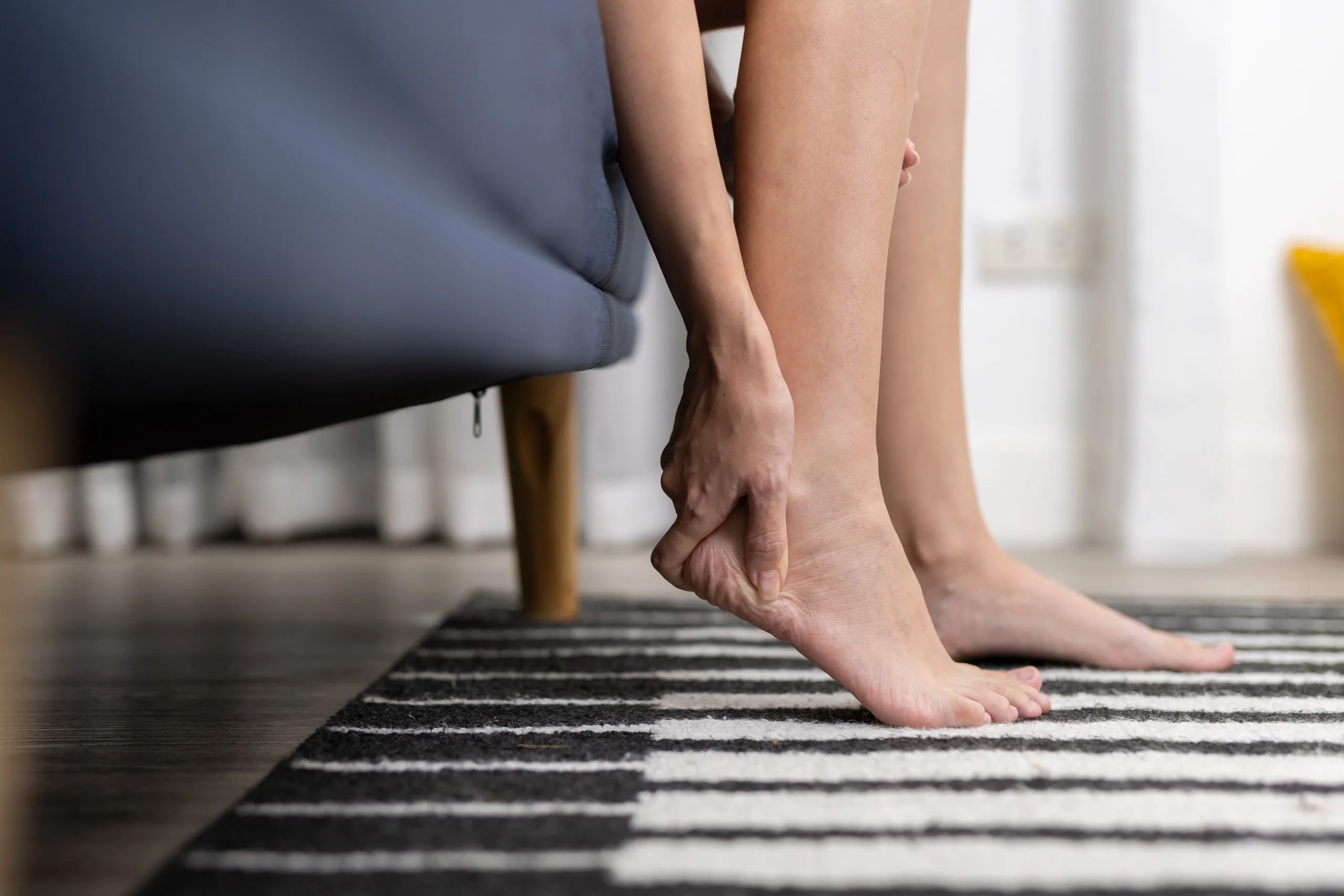
Yes – cortisone injections do work for plantar fasciitis, but only in a limited way. They calm pain quickly, often within a few days, yet the relief is temporary, and the injection does not repair the damaged tissue causing the problem. If you understand what a cortisone shot can and cannot do, you can make a smarter decision about your heel pain instead of chasing short-term relief that keeps coming back.
At Restore Podiatry & Laser Center in Hicksville, NY, our team focuses on non-invasive therapies that target the underlying cause of plantar fasciitis rather than masking it.
The plantar fascia is a thick, web-like band of tissue connecting your heel bone to the base of your toes. It works like a bowstring, supporting your arch and absorbing shock with every step.
When that band is overloaded, tiny tears and irritation develop where it attaches to the heel. Over time, the tissue thickens and loses its springiness – one of the most common causes of heel pain we treat, affecting athletes and anyone on their feet all day.
Cortisone is a powerful synthetic corticosteroid that mimics cortisol, your body’s natural anti-inflammatory hormone. Injected near the irritated area of the plantar fascia, it:
Suppresses inflammation around the micro-tears in the fascia
Blocks pain signals by reducing pressure on nearby nerve endings
What cortisone does not do is rebuild collagen, restore tissue strength, or correct the arch mechanics that overloaded your fascia. It turns down the alarm – it doesn’t put out the fire.
The procedure is quick and performed right in our Hicksville office. Dr. Davinder Bhela identifies the most tender point on the heel, cleans the skin, and injects the medication – often mixed with a local anesthetic for immediate comfort. Many patients describe brief pressure or stinging.
Afterward, you may feel numb or unusually comfortable for a few hours, followed by a possible “flare” of soreness for a day or two before the cortisone takes full effect. Most people are advised to limit heavy standing, walking, and impact activity for a short period.
Fast, in most cases. The local anesthetic may provide immediate relief, and the cortisone itself typically takes effect within 24 to 72 hours – many patients feel a clear difference within a week. Some experience a temporary “cortisone flare,” where pain briefly worsens before improving significantly.
Relief commonly lasts a few weeks to a few months. Research on cortisone for plantar fasciitis consistently shows meaningful short-term benefit that fades over time, with outcomes at several months often similar to non-injection care.
Some patients stay comfortable long-term – usually because they used the pain-free window to fix footwear, stretch daily, and address mechanics. Others feel great for six weeks, change nothing, and the pain returns.
No. A cure would mean the fascia heals and stays healthy under normal load. Cortisone provides a “cease-fire” in the inflammatory battle, but it doesn’t rebuild damaged tissue or correct the biomechanics that caused the problem.
Loading the fascia in a controlled way helps it remodel and get stronger. Calf stretching, plantar fascia stretching, and progressive strengthening are the backbone of recovery.
Unlike over-the-counter inserts, custom orthotics are molded specifically for your feet to support the arch, control excess motion, offload the plantar fascia, and cushion the heel. If you have flat feet or another structural factor, orthotics can be the difference between temporary relief and lasting improvement.
Focused shockwave and radial shockwave therapy work on a different principle than cortisone. Instead of suppressing inflammation, acoustic waves create beneficial microtrauma that stimulates blood flow, breaks down scar tissue, and promotes the regeneration of healthy ligament tissue.
Sessions are brief, with no needles or anesthesia
Most patients walk out and resume normal activity immediately
A cornerstone of our Power Heel Program
Replace shoes before they break down; skip flat, unsupportive styles
Avoid walking barefoot on hard floors at home
Stretch your calves every morning and evening
Cross-train to reduce repetitive impact
Take standing breaks if you’re on your feet all day
Manage body weight to reduce load on the fascia
Don’t wait for heel pain to “go away on its own.” Self-diagnosing is risky – other conditions cause similar symptoms. Schedule an evaluation if:
Heel pain has lasted more than two or three weeks
Morning pain is getting worse rather than better
You’re limping or altering how you walk
Pain wakes you at night or includes numbness or tingling
Pain followed a specific injury
Pain interferes with daily activities or doesn’t improve with home care
You have diabetes or circulation concerns
You’ve already had injections, and the pain keeps returning
Restore Podiatry & Laser Center is located at 66 West Barclay Street in Hicksville, NY. Reach our office at (516) 806-2200 or learn more about Dr. Davinder Bhela and our approach to non-invasive foot care.
Cortisone injections work – for pain, and usually for weeks to a few months. They don’t repair the plantar fascia or fix the mechanics that caused the problem, and repeat injections carry real limits.
Used thoughtfully, a cortisone shot creates a comfortable window to begin stretching, custom orthotics, shockwave therapy, and other regenerative care that actually addresses the damaged tissue. If heel pain has been slowing you down, an evaluation at Restore Podiatry & Laser Center can identify the true cause and develop a plan for lasting relief.
About the Author
Dr. Davinder Bhela, DPM
August 25, 2026