
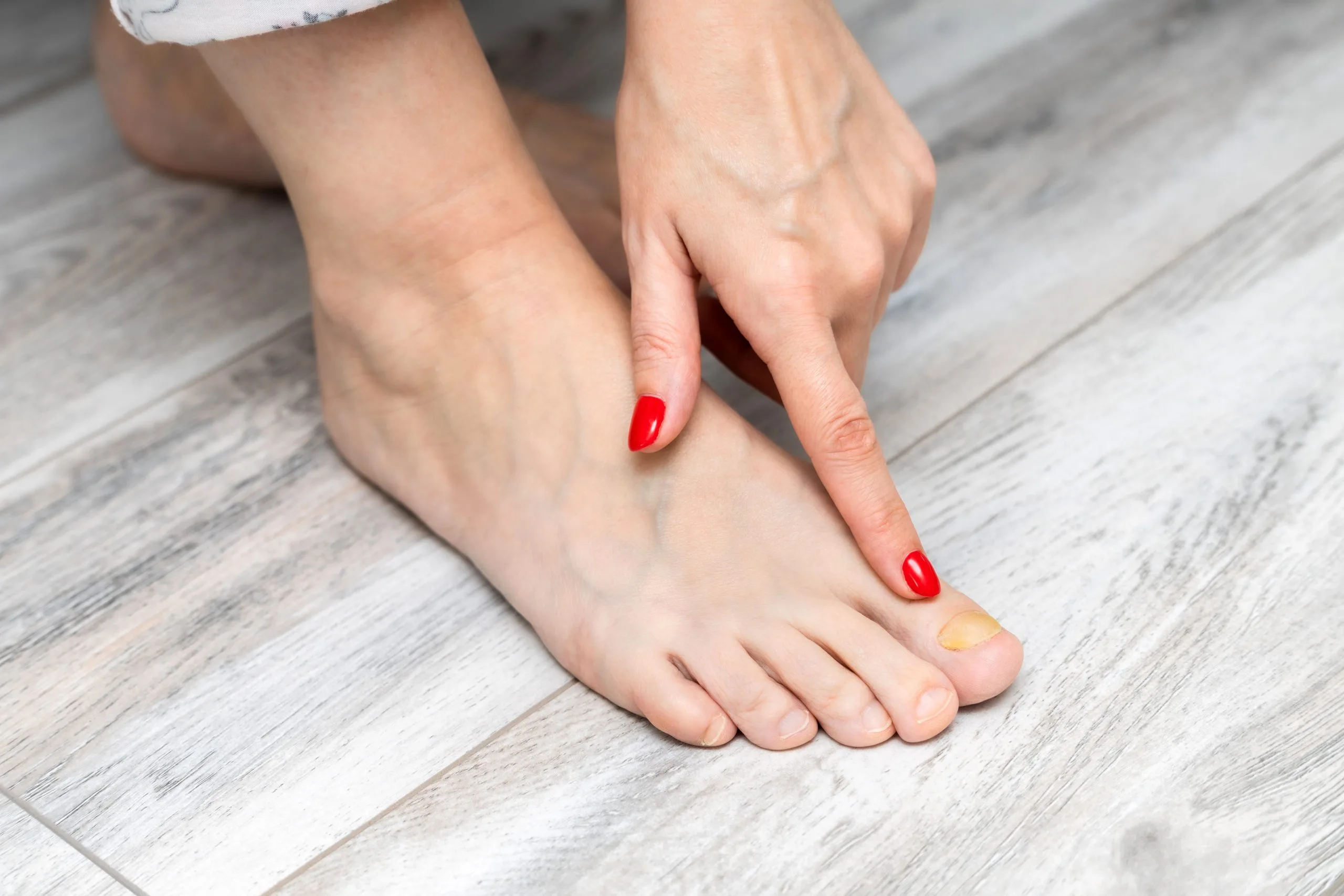
Thick, yellow, crumbly nails are frustrating. They can be embarrassing, they can hurt in shoes, and they often come back after you’ve tried every cream on the pharmacy shelf. The good news is that toenail fungus can be treated. The most effective approach combines a confirmed diagnosis with treatment that reaches the fungus living beneath the nail, where creams and home remedies rarely go. Prescription oral antifungals have the strongest track record in clinical studies. Laser therapy, paired with good nail care, is a proven, drug-free option for people who can’t or don’t want to take pills. Here is how each option works, so you can choose with confidence.
Fungus doesn’t sit on the surface of your nail. It settles into the nail bed and the nail plate itself, a dark, warm, moist spot that is very hard to reach. The nail is also thick and dense, which blocks most topical products from soaking in.
That is why so many people tell us the same story: months of polish-on treatments and vinegar soaks, and nothing changed. It isn’t your fault. It’s a tough infection in a hard-to-treat location.
Common signs include:
Yellow, brown, or white discoloration
Thickened nails that are hard to trim
Brittle, crumbling edges
A slightly foul odor
Nails that lift away from the skin
Soreness or pressure inside closed shoes
Not every discolored nail is fungus. Psoriasis, nail injuries, and even some skin conditions can look very similar. Treating the wrong problem wastes time and money.
Sometimes a quick nail sample confirms the diagnosis. Other times, an experienced eye and a careful exam are enough. Either way, knowing what you’re dealing with is the first step toward clearing it.
“I can’t count how many patients come in after spending a year treating what turned out to be something else, or a fungus that was never reached in the first place. A proper exam saves people so much frustration.” – Dr. Davinder Bhela, DPM
Medicated nail lacquers and prescription solutions are the gentlest starting point. They work best on:
Mild infections
Early cases affecting only a small part of one nail
Thin nails
The catch: They need to be applied every day, often for a year or longer, and cure rates are modest. Over-the-counter creams are meant for skin, such as athlete’s foot, and generally don’t penetrate the nail at all. If your fungus has spread to the surrounding skin, it’s worth treating athlete’s foot at the same time, so it doesn’t keep re-infecting your nails.
Prescription pills such as terbinafine work from the inside out, traveling through your bloodstream to reach the infection. Studies show they have some of the highest cure rates of any single treatment.
They also come with trade-offs:
Blood tests may be needed to monitor liver health
They can interact with other medications
They are not a good fit for everyone, including people with liver conditions or those taking certain drugs
Results take time, because the healthy nail must grow out completely
The fungus can still return
Many patients come to us because pills weren’t right for them or didn’t fully work. Please talk with your doctor about your health history before starting any oral medication.
This is where our practice focuses. Laser treatment delivers focused light energy through the nail to target the fungus beneath the nail. It is non-invasive, with no anesthesia and no recovery time. Most patients walk out and go right back to their day.
You can read more about how laser treatment for fungal toenails works, but here is the simple version. Fungus is sensitive to heat and light energy. The laser damages it while sparing the healthy tissue around it. Over the following months, a clearer nail grows in to replace the damaged one.
“Laser therapy gives patients an option that doesn’t involve their liver or a daily routine they can’t stick with. When it’s paired with the right follow-up care, I’ve watched nails that were discolored for years grow back clear and healthy.” – Dr. Davinder Bhela, DPM
We examine your nails and talk through your history and goals
The laser is passed over the affected nails, usually with only a warm sensation
You go home with simple steps to protect your progress
We check in as the new nail grows
Here is something we tell every patient: the fungus is only half the story. Your shoes, socks, showers, and daily habits can re-infect you if they aren’t addressed. That is why our Clear Nail Program uses a multi-step approach instead of one-and-done thinking. It combines laser treatment with nail care guidance and follow-up so you aren’t just clearing the fungus but keeping it away.
“The patients who get the best results are the ones who treat the whole picture: the nail, the shoes, and the habits. Fungus is stubborn, but so are we.” – Dr. Davinder Bhela, DPM
One of our patients, Charlotte, lived with nail fungus for seven years and tried creams and home remedies that never lasted. After laser treatment and guidance from Dr. Bhela, she finally saw it clear. You can read her story and others on our testimonials page or see real results in our before-and-after gallery.
Sometimes a doctor will carefully trim or thin a thick, infected nail. This relieves pressure and pain, and it helps other treatments work better. In severe cases, a nail may be partially or fully removed. That is usually a last resort, and surgical options should never be your first step.
If a thickened nail has also become painful because it’s curling into the skin, it may be worth reading about ingrown toenails, since the two problems often overlap.
Tea tree oil, vinegar soaks, and baking soda are popular, but the evidence behind them is thin. They may help keep your feet cleaner, but they rarely cure a true nail infection because they can’t penetrate the nail plate. If a home remedy hasn’t worked after a few months, that is your sign to get help rather than keep trying.
Some people should see a podiatrist promptly rather than experiment on their own. That includes anyone with:
Diabetes or poor circulation
Nerve damage or numbness in the feet (see our information on diabetic neuropathy)
A weakened immune system
Pain, swelling, redness, or drainage around the nail
For these patients, a simple nail problem can more easily lead to a skin infection or wound.
Toenail fungus has some surprising quirks:
Your nails move slowly. A big toenail can take 12 to 18 months to grow out completely, which is why the results take time even after successful treatment.
Fungus eats what your nails are made of. The type of fungus that causes most infections feeds on keratin, the same protein in your hair and nails.
Your shoes can keep it alive. Fungal spores can linger in shoes for a long time, which is one reason people can get reinfected after being cured.
Toenails grow slower than fingernails. Fingernails grow around three times faster, which is why fingernail fungus is much rarer and easier to clear.
You may have caught it in a place you’d never suspect. Pool decks, gym showers, and even nail salon tools are classic culprits, and tiny, unnoticed injuries to the nail make it easier for fungus to get in.
It runs in families. Some people are simply more prone to it, which is why one household member’s nail fungus often shows up in relatives.
The “healed” nail may still look odd for a while. Damage from years of infection can leave ridges or thickness even after the fungus is gone. Give the new nail time to grow in.
Once your nails are clear, a few habits protect that progress:
Dry your feet thoroughly, especially between your toes
Wear moisture-wicking socks and change them when they get damp
Rotate your shoes so they can dry out fully between wears
Wear sandals or shower shoes in gyms, pools, and locker rooms
Keep your nails trimmed straight across and clean your clippers
Treat athlete’s foot as soon as you notice it
Avoid sharing nail tools
There is no single best option for everyone. Your age, health, medications, and how far the infection has spread all matter. Here is a simple way to think about it:
Mild and early? Topical treatment plus good nail care may be enough.
Moderate to severe, and you’re a good candidate? Oral medication is a strong option to discuss with your doctor.
Want to avoid pills, or they haven’t worked? Laser therapy with a structured program is a well-tolerated, no-downtime choice.
Pain or thick nails? Debridement can improve comfort and help other treatments work.
We are a cash-pay practice, and we keep our pricing transparent. If cost is a concern, take a look at our financing options.
You don’t have to hide your feet or keep guessing which product to try next. At Restore Podiatry & Laser Center, we take the time to understand what you’ve already tried and build a plan that fits your health and your goals. You can learn more about Dr. Bhela’s background and approach, then call us at (516) 806-2200 to schedule a visit at our Hicksville office.
Disclaimer: This article is for general educational purposes only and is not a substitute for professional medical advice, diagnosis, or treatment. Individual results vary. Always consult a qualified healthcare provider about your specific condition before starting any treatment.
About the Author
Dr. Davinder Bhela, DPM
September 24, 2026