
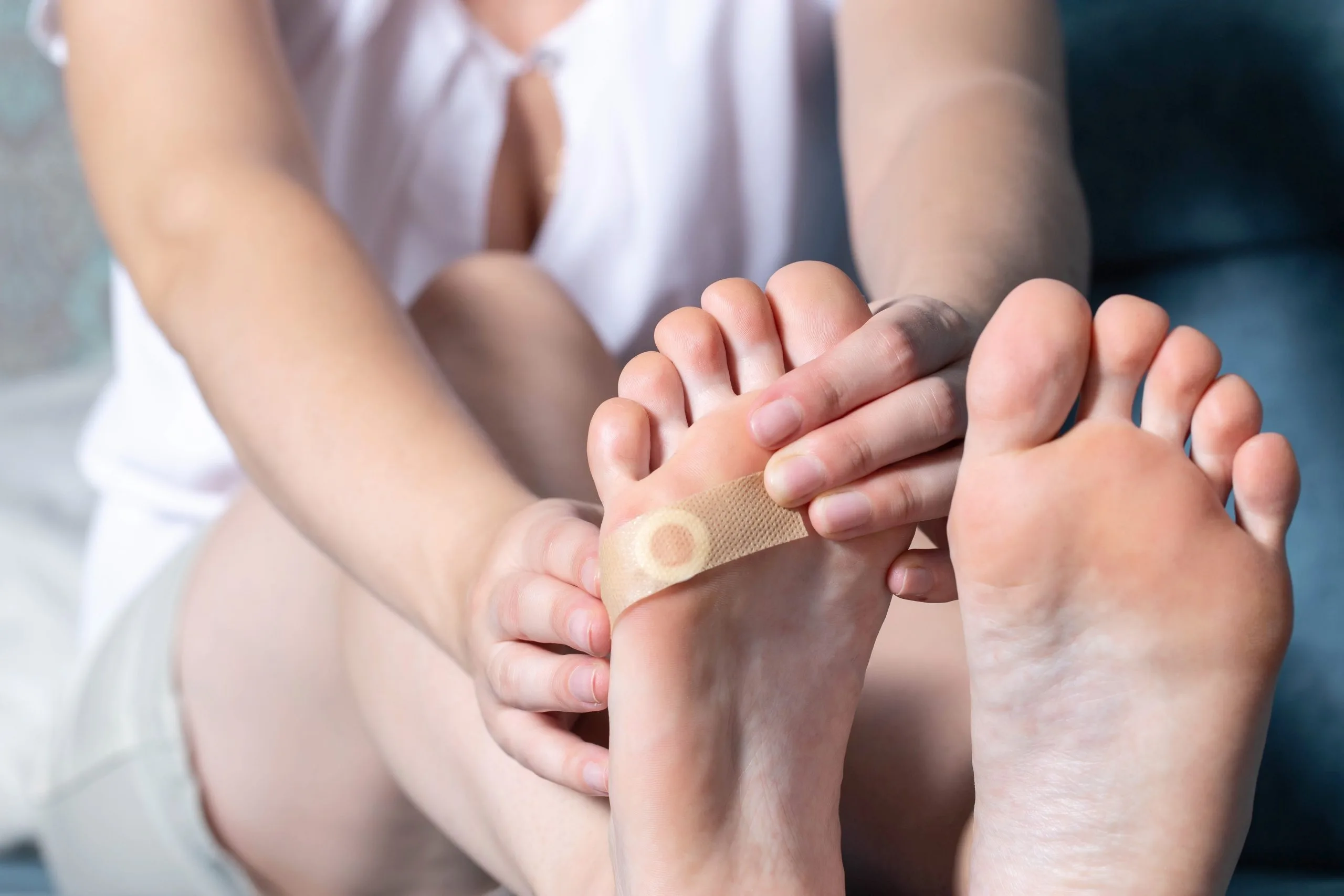
Plantar warts hurt in a very particular way. It can feel like a pebble is stuck in your shoe, and it never goes away. You may have tried freezing, drugstore acid pads, or a home remedy your neighbor swore by, and the wart is still there, or it came back a few months later. The good news is that you have real options.
For most people, the best treatment is one that helps your immune system recognize and clear the virus behind the wart, instead of just burning or cutting away the surface. That is why we rely on Swift Microwave Therapy at our Hicksville office. It is quick, needs no anesthesia, and works on many warts that haven’t budged with other treatments. Below, we’ll explain why warts are so stubborn, how the common treatments compare, and what to expect if you decide to get help.
A plantar wart is a small growth on the bottom of the foot. It is caused by the human papillomavirus (HPV), which slips in through tiny cuts or weak spots in the skin. Warm, damp places like locker rooms, pool decks, and gym showers are common spots to pick it up.
Your feet make things harder. Every step pushes the wart inward instead of letting it grow outward. That is why plantar warts often sit flat, feel tender, and hurt when you walk or stand for long periods. A thick layer of hard skin usually forms on top, which can block creams and acids from reaching the virus underneath.
“Most patients tell me they’ve tried everything at home before they see me. The wart isn’t stubborn because they did something wrong. It’s stubborn because the virus is hiding from the immune system.” – Dr. Davinder Bhela, DPM
Many wart treatments can work, especially for new or small warts. Here is how the usual options compare.
Salicylic acid pads and liquids slowly peel the wart away. They can help with small, recent warts, but they take weeks or months of daily use. They can also irritate healthy skin around the wart.
Freezing is one of the most common office treatments. It creates a blister that lifts the wart. It can work, but it is often painful, and it may take several rounds. Many people come to us after months of freezing with little to show for it.
Stronger acids and blistering agents, such as cantharidin, are also used. They can be helpful for some patients. They can also leave you with a blister on the bottom of your foot, which makes walking uncomfortable for days.
Cutting out or scraping away a wart is usually a last resort. It can leave a tender scar on a weight-bearing part of the foot, and warts can return even after surgery.
What these methods have in common is that they mostly attack the wart’s surface. Warts that keep coming back usually need a different approach.
Swift Microwave Therapy uses a small, controlled dose of microwave energy applied through a probe. The energy gently heats the tissue at the base of the wart. That heat helps your immune system notice the HPV infection, and your body can then start clearing it naturally over time.
The treatment doesn’t burn, freeze, or cut the skin. It works with your body instead of against it.
Here is what you can expect at our office:
A thorough exam. We confirm that the growth is really a wart and review what you’ve already tried.
A short treatment. Each application takes just a few seconds.
No anesthesia and no wound care. The skin isn’t broken, so you won’t need bandages or special ointments.
Walk out and go on with your day. There is no downtime.
Follow-up visits. We track how your immune system is responding, and most people improve over a series of sessions.
“The first thing patients notice is how simple it feels. There’s no needle, no cutting, and no blister to babysit afterward. They walk in, we treat the wart, and they walk out.” – Dr. Davinder Bhela, DPM
Swift Microwave Therapy is a strong fit if you:
Have warts that didn’t respond to over-the-counter products or freezing
Want to avoid surgery or a painful recovery
Are active and can’t afford time off your feet
Have had the same wart return more than once
One of our patients, Olivia, put it this way: after years of home remedies that didn’t work, her stubborn wart was gone after two treatments. You can read more stories on our testimonials page.
Some warts need more than a single tool. That is why we built our Clear Wart Program, which is designed for long-standing warts and cases where other treatments haven’t worked. It combines a careful evaluation, Swift Microwave Therapy, and close follow-up to adjust your plan as your body responds.
“When someone has fought a wart for years, they deserve a plan and not just another try. Our program is built around finding out what’s driving the wart, treating it at the source, and checking in until it’s truly gone.” – Dr. Davinder Bhela, DPM
Dr. Bhela has spent more than a decade focused on non-invasive, regenerative foot care, and warts are one of the problems where that approach makes a real difference. You can learn more about his background on his page.
Warts have some surprising quirks. Here are a few facts you probably didn’t know:
Those little black dots aren’t seeds. They are tiny clotted blood vessels that feed the wart. Warts don’t spread by dropping seeds, but the virus can spread through skin contact and shared surfaces.
Your skin’s “fingerprint” can give it away. The lines on the bottom of your foot follow a pattern, much like fingerprints. A callus keeps those lines. A wart interrupts them, so the lines seem to go around it.
The virus behind foot warts is not the one you’re probably thinking of. Plantar warts are usually caused by different HPV types than the ones linked to other conditions, and they are common in kids, teens, and adults.
Warts can vanish on their own. Some do clear up when the immune system finally catches on, but it may take months or even a couple of years. Nobody wants to walk on a painful spot that long.
The wart may not show up right away. After the virus enters, it can remain quiet for weeks or months before a wart appears. That is why it is hard to say exactly where you picked it up.
Feet can be great at hiding it. Because pressure flattens the wart, many people assume they have a callus or a bruise for weeks before they think of a wart.
Not every spot on the foot is a wart, and some skin problems can look alike. It is a good idea to see a podiatrist if:
The spot is painful, bleeding, or changing in color or shape
It hasn’t improved after several weeks of home care
You have several warts, or they are spreading
You have diabetes, poor circulation, or a weakened immune system (please don’t try to treat these at home)
You aren’t sure whether it is a wart, a callus, or something else
“I always tell people that a wart that looks simple can be something different. A proper exam takes a few minutes and can save months of guessing.” – Dr. Davinder Bhela, DPM
Even after a wart clears, a few habits help protect your feet:
Wear sandals or shower shoes in locker rooms, gyms, and public pools
Keep your feet clean and dry, and change damp socks promptly
Don’t pick at warts or shave over them, which can spread the virus
Cover any cuts or cracks on your feet
Don’t share towels, socks, or shoes
You shouldn’t have to plan your day around a painful spot on your foot. If you’ve tried other treatments without success, or you’d rather skip the trial-and-error, we’d be glad to help. Our team at Restore Podiatry & Laser Center in Hicksville, NY, will examine your foot, review your medical history, and develop a plan that fits you. You can see real results in our before-and-after gallery or call us at (516) 806-2200 to schedule a consultation.
Disclaimer: This blog post is for general educational purposes only and is not a substitute for professional medical advice, diagnosis, or treatment. Results vary from person to person. Always talk with a qualified healthcare provider about your specific condition. If you have diabetes, poor circulation, or a weakened immune system, see a podiatrist before treating any foot growth.
About the Author
Dr. Davinder Bhela, DPM
September 24, 2026