
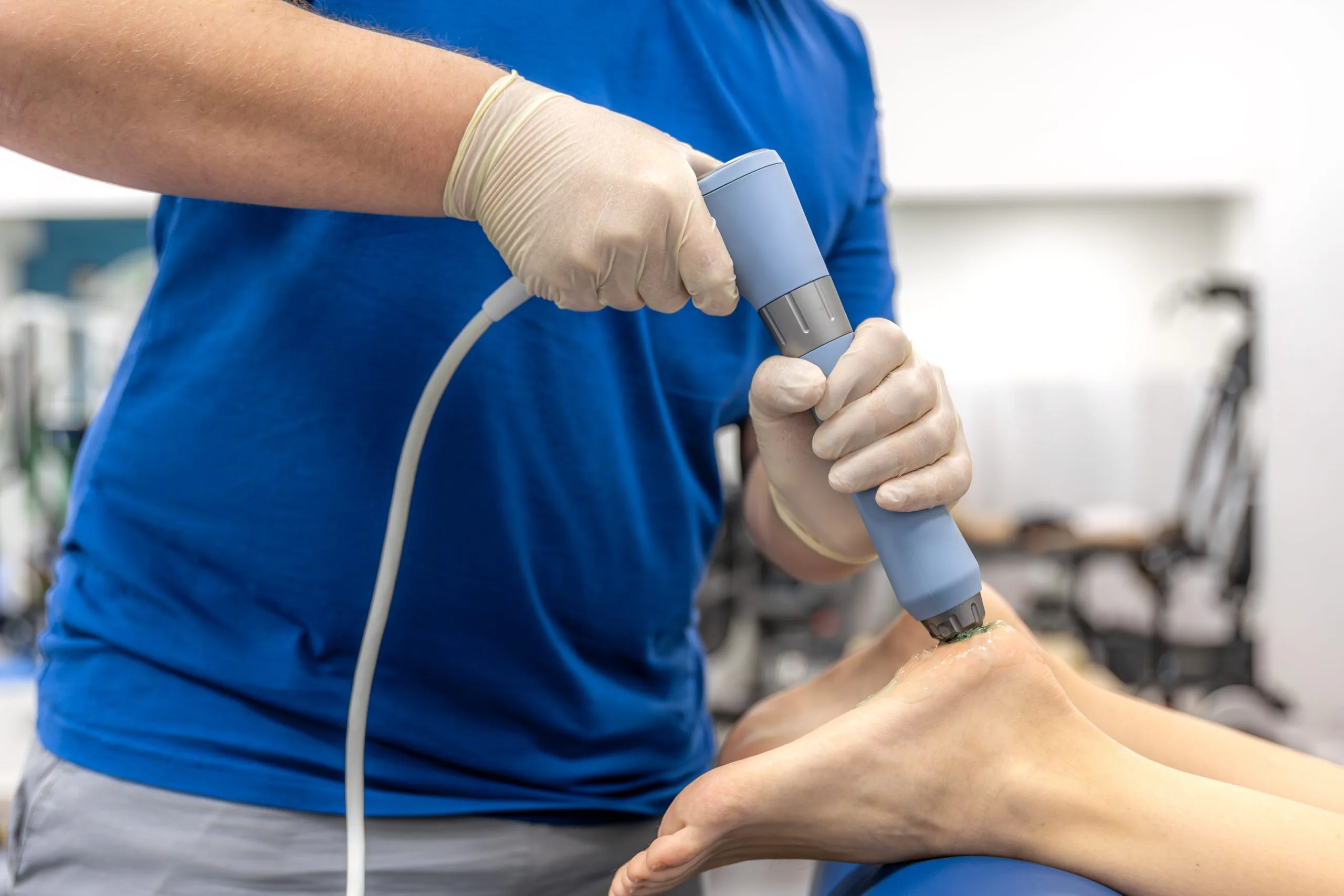
Plantar fasciitis is a common cause of heel pain caused by degeneration and inflammation of the plantar fascia — the thick connective band that runs from the heel to the toes. Symptoms are often worst with the first steps in the morning or after long rest. While conservative care (rest, stretching, orthotics, activity modification, NSAIDs, physical therapy) helps many people, a subset remain symptomatic and need additional options. Extracorporeal shock-wave therapy (ESWT, aka shock-wave therapy) has become a well-studied, noninvasive alternative that can offer meaningful pain relief and functional gains for those patients.
Shockwave therapy uses high-energy acoustic waves that are directed to the affected area. These waves create controlled micro-injuries within the tissue, which stimulate the body’s natural repair mechanisms and encourage faster recovery.
Some of the key benefits of shockwave therapy include:
Because shockwave therapy is noninvasive, it offers an excellent option for individuals seeking relief from plantar fasciitis and other chronic conditions without relying on long-term medication or undergoing surgery.
ESWT is performed outpatient and is noninvasive. Sessions are usually brief (about 10–20 minutes per foot). Protocols vary: some practitioners deliver a single high-energy session (sometimes with local anesthesia), while others give multiple lower-energy treatments spaced over weeks. Mild to moderate post-procedure soreness, bruising, or numbness can occur but serious complications are uncommon. Many patients notice pain relief within weeks; some benefits accrue over months as the tissue remodels.
What they did: Aggregated six randomized controlled trials comparing SW vs. CS in treating chronic plantar fasciitis.
Key findings:
Conclusion: Both treatments worked for pain and function, but SW offered superior pain relief at 3 months.
What they did: Included 16 RCTs (1,121 patients) comparing ESWT vs. CS injections, assessing pain, fascia thickness, and foot function at 3 and 6 months.
Key findings:
At 3 months:
At 6 months:
Safety: Both were generally safe; ESWT’s adverse effects were mild—mostly local pain and slight erythema PubMed.
Conclusion: ESWT offers consistently superior outcomes in terms of pain, fascia thickness, and function—not only in the short term but at mid-term (6 months).
What they did: Directly compared radial ESWT vs. CS injections for chronic plantar fasciitis.
Key point: This trial specifically targeted individuals with persistent plantar fasciitis and evaluated outcomes of pain and functionality.
Conclusion: While this RCT supports the efficacy of ESWT, the broader meta-analyses already encompass its findings. Inclusion highlights that direct clinical comparisons corroborate the meta-analytic trends Oxford Academic.
Note: Although this study compares ESWT with PRP—and not CS—it reinforces that ESWT is a successful approach for plantar fasciitis. However, since it doesn’t involve CS, it’s less directly relevant to the core comparison ScienceDirect+1. We mention it briefly for context: ESWT is broadly effective across comparison groups.
Multiple clinical studies have shown that shockwave therapy can provide significant relief for patients struggling with chronic plantar fasciitis:
The cost of shockwave therapy for plantar fasciitis can vary depending on the clinic, the technology used, and the number of sessions needed. On average, patients can expect to pay between $250 to $450 per session, with most treatment plans requiring 3 to 6 sessions for optimal results. While insurance may not always cover this advanced treatment, many patients find it a worthwhile investment because it provides long-lasting relief, reduces the need for ongoing medications, and helps avoid more invasive procedures like surgery.
Shockwave therapy has been widely used for more than 20 years and has shown promising results in easing heel pain caused by plantar fasciitis. Still, outcomes vary from person to person, and not all patients experience the same level of relief. Another important factor to consider is that this treatment is typically not covered by most insurance providers. If you’re exploring options for managing plantar fasciitis, consulting with a foot and ankle specialist is the best way to determine whether shockwave therapy is a suitable choice for your needs.

About the Author
Dr. Davinder Bhela, DPM
July 8, 2025