
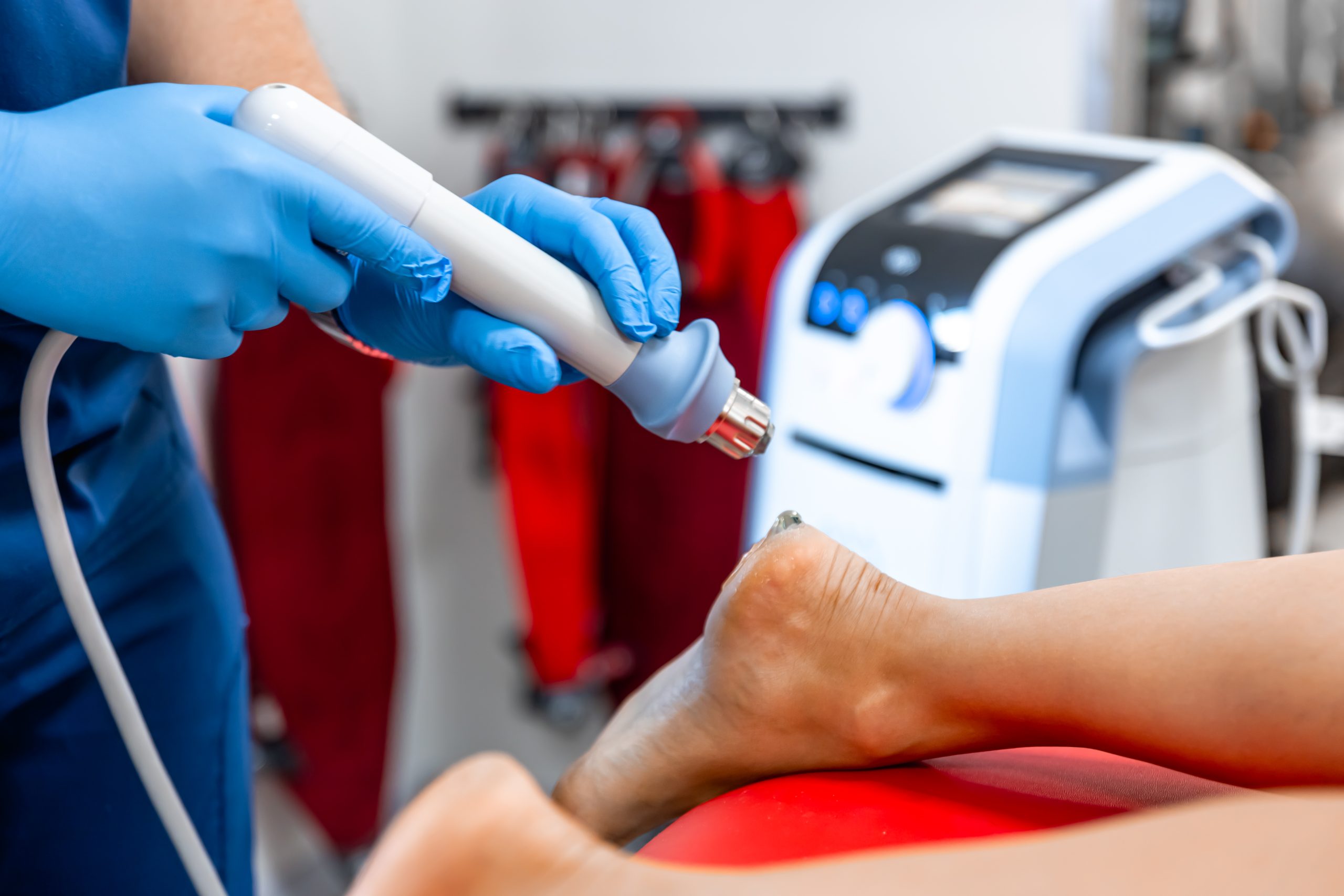
Shockwave therapy typically causes mild to moderate discomfort during treatment, but most patients find it very tolerable and well worth the results. At Restore Podiatry & Laser Center in Hicksville, NY, patients often describe the sensation as a deep pulsing or tapping feeling rather than sharp pain. While you will feel the treatment, the discomfort is temporary and a sign that the therapy is stimulating your body’s natural healing response.
Most patients describe the sensation of shockwave therapy as:
A tapping feeling against the skin
Deep pressure that comes in quick pulses
Similar to having a rubber band snapped against your skin
A vibrating or pulsating feeling that penetrates deep into the tissue
When the applicator passes over the most damaged or inflamed part of the tissue – the target area for healing – you might feel a more intense, focused ache. Think of it this way: the treatment creates a controlled “micro-trauma” to restart your body’s stalled healing process.
Dr. Davinder Bhela communicates with you throughout the session, adjusting the intensity to ensure the treatment is both effective and tolerable. Many patients are surprised by how quickly the session is over, typically lasting only 5-10 minutes.
For most people, shockwave therapy is not “painful” in the way a sharp injury is. On a scale of 1-10, many patients rate their discomfort between 3 and 4 during treatment, placing it in the mild-to-moderate range rather than true pain.
The feeling is often localized to the exact spot of your chronic pain, which indicates the therapy is targeting the correct tissue. This discomfort is a necessary part of the process – the acoustic waves are creating a controlled inflammatory response to encourage tissue regeneration.
Unlike other treatments that mask pain or require significant recovery time, shockwave therapy encourages your tissues to heal themselves from the inside out. The temporary discomfort during the brief session leads to lasting relief from the chronic pain you’ve been living with for months or even years.
Everyone has a different tolerance for discomfort. What one person describes as deep pressure, another might experience more intensely. Dr. Bhela starts treatment at a lower intensity and gradually increases it to a level that is therapeutically effective while remaining within your comfort zone.
The location and nature of your injury significantly influence what you’ll feel:
More Sensitive Areas:
Bony prominences (areas where bone is close to skin)
Areas with severe, chronic inflammation
Nerve-rich regions
Common Conditions and Their Sensitivity:
Heel spurs – Usually moderate sensitivity
Plantar fasciitis – Can be more sensitive in acute cases
Achilles tendonitis – Varies based on location
Chronic heel pain – Often less sensitive due to tissue changes
Restore Podiatry & Laser Center utilizes different types of shockwave technology, each with different sensation profiles:
Radial Shockwave Therapy: Generates waves that spread over a larger, more superficial area. Feels like strong, tapping pulses. Excellent for larger treatment zones and conditions closer to the surface.
Focused Shockwave Therapy: Concentrates acoustic energy into a single, deep point. The sensation can be more intense and “sharp” but highly effective for specific problems like deep plantar fascia tears or certain types of foot arthritis.
The practitioner’s skill is perhaps the most critical factor. Dr. Bhela’s expertise allows him to:
Manipulate the applicator precisely
Adjust frequency and intensity in real-time
Identify the exact locations of damaged tissue
Minimize discomfort in surrounding healthy areas
A typical shockwave session follows these steps:
Preparation – Dr. Bhela applies gel to your skin over the treatment area
Dr. Bhela starts treatment at a very low intensity
Dr. Bhela increases intensity based on your feedback
You’ll hear clicking sounds and feel the pulses
Post-Treatment – Discomfort usually stops immediately when the device is removed
Your active participation can make the session more comfortable:
Communicate – Tell Dr. Bhela if the intensity is too high
Breathe – Focus on slow, deep breaths to help relax
Relax the muscle – Don’t tense the treatment area
Find a relaxed position on the treatment table
Come well-rested and not stressed
Before Treatment: Generally not recommended. We need your honest feedback to locate pain sources and ensure appropriate treatment intensity.
After Treatment: Avoid anti-inflammatory medications (Ibuprofen, Naproxen) as they can counteract the healing response. Tylenol (acetaminophen) is generally acceptable, but discuss any medication with Dr. Bhela first.
It’s normal to experience minor effects that typically resolve within 24-48 hours:
Redness or warmth in the treated area
Mild swelling or bruising
Temporary soreness or dull ache
Tingling sensations
Feeling like you exercised the area
These are positive signs that the treatment has activated tissue healing. Many patients report a significant reduction in primary pain within hours, even with temporary soreness.
So, is shockwave therapy painful? While it involves temporary discomfort, it’s a manageable sensation that signals your body’s powerful healing response. For patients struggling with chronic foot and ankle conditions, the brief discomfort during treatment is a worthwhile investment for achieving lasting, non-surgical relief.

About the Author
Dr. Davinder Bhela, DPM
May 28, 2026